First Aid Kit & Safety Kits for Workplace, Industry & Home | Health Point
Explore First Aid Kits, Industrial Safety Kits, Workplace Kits, Travel Kits, Hospital Kits, Home Safety Kits and Burn Care Kits from Health Point.
Accidents and medical emergencies rarely happen at a convenient time.
A cut in a factory, a minor burn in a kitchen, an injury at a construction site, a fall at home, a medical emergency during travel or a small workplace incident can all require immediate attention before professional medical help is available.
This is where a First Aid Kit, Safety Kit or Burn Care Kit becomes important.
A well-planned emergency kit is not a replacement for professional medical care. Instead, it provides essential supplies that can be used for initial first aid and immediate response while further medical assistance is arranged when necessary.
The right kit, however, is not necessarily the biggest kit.
The right kit is the one designed around the risks, environment and people who may need it.
At Health Point, we provide a range of first aid, safety and emergency preparedness kits designed for different environments, including industrial workplaces, offices, hospitals, travel, homes and specialised applications.
Why Is It Important to Have a First Aid or Safety Kit?
When an injury occurs, the first few minutes can be important.
Having basic first-aid supplies readily available means that a trained person can begin appropriate first aid without first searching for bandages, dressings, gloves or other basic supplies.
Workplace safety guidance from organisations such as OSHA and the UK’s Health and Safety Executive emphasises that first-aid supplies should be readily accessible and that the contents should reflect the hazards and needs of the particular workplace. OSHA
A first aid kit can help provide supplies for situations such as:
- Minor cuts and wounds
- Scrapes and abrasions
- Minor burns
- Sprains and strains
- Small bleeding injuries
- Basic wound dressing
- Eye-related first-aid situations
- Minor workplace injuries
- Travel-related incidents
- Other situations requiring immediate basic first aid
The kit should be easily accessible, regularly checked and replenished after items are used or expire. The American Red Cross also recommends keeping first-aid kits in locations such as homes and vehicles and checking their contents regularly. Red Cross
First Aid Kit vs Safety Kit vs Burn Care Kit
These terms are sometimes used interchangeably, but they can serve different purposes.
First Aid Kit
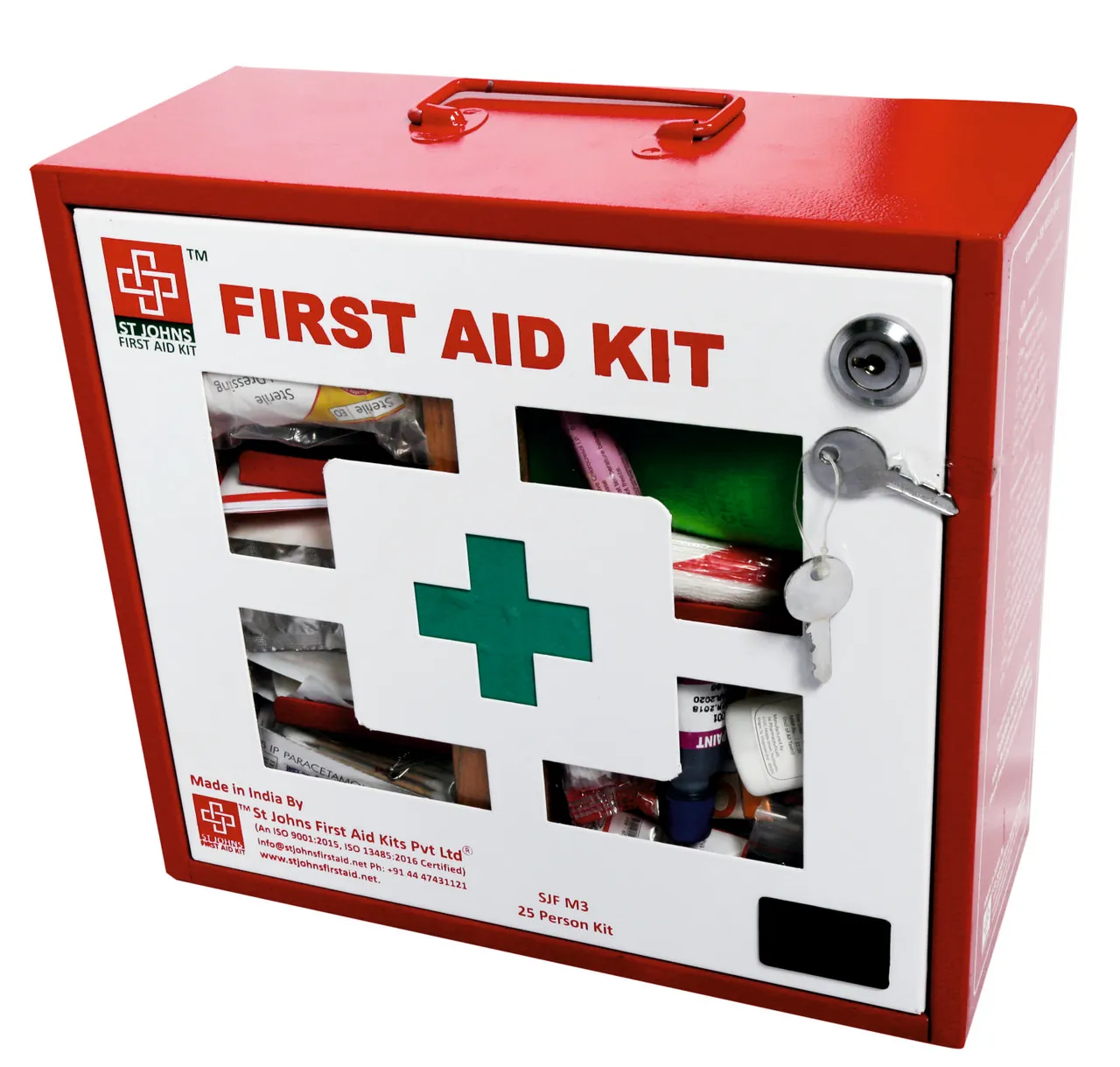
A First Aid Kit is designed to provide commonly required supplies for treating minor injuries and providing initial first aid.
Depending on the intended environment, it may contain items such as:
- Adhesive bandages
- Sterile gauze
- Wound dressings
- Medical tape
- Antiseptic or cleansing supplies
- Disposable gloves
- Scissors
- Bandages
- Emergency instructions
- Other first-aid essentials
The exact contents should depend on where the kit will be used and the risks involved.
Safety Kit
A Safety Kit can be broader than a conventional first-aid kit.
It may combine first-aid supplies with items intended to support emergency preparedness, personal protection or workplace response.
For example, a workplace safety kit may include:
- First-aid supplies
- Protective gloves
- Masks
- Eye protection
- Emergency blankets
- Safety-related accessories
- Basic emergency-response supplies
The contents should be selected according to the workplace risk assessment rather than simply buying a generic kit. OSHA guidance similarly recommends assessing workplace hazards and providing appropriate quantities and types of first-aid supplies. OSHA
What Is a Burn Care Kit?
Burn injuries can happen in many environments.
Factories, commercial kitchens, laboratories, workshops, hospitals, hotels and even homes may have potential sources of heat, steam, hot liquids or other burn hazards.
A Burn Care Kit is designed specifically to provide supplies intended for the initial first-aid management of burn injuries.
Depending on the kit and application, it may contain products such as:
- Burn dressings
- Burn gel or other burn-care products
- Sterile dressings
- Gloves
- Wound-care supplies
- Protective materials
- Instructions for use
The contents should be appropriate for the expected hazards and should not be considered a substitute for medical evaluation when a burn is serious or extensive.
For workplaces where burns are a foreseeable risk, having dedicated burn-care supplies can complement the general first-aid provision.
Why Different Industries Need Different Kits
A common mistake is assuming that one standard first-aid kit is suitable for every workplace.
It isn’t necessarily.
A small office has different risks from a manufacturing plant.
A construction site has different hazards from a hotel.
A vehicle travelling long distances has different requirements from a hospital.
Workplace first-aid guidance recommends considering the nature of the work, the hazards present, the number of people, the location and accessibility of emergency medical assistance when determining first-aid requirements. OSHA
That’s why Health Point’s portfolio includes different categories of kits.
First Aid & Safety Kits for Different Environments
1. Industrial First Aid Kits
Industrial workplaces can involve machinery, tools, electrical equipment, chemicals, heat and other occupational hazards.
Depending on the specific workplace, an industrial first-aid setup may require a more comprehensive selection of:
- Wound dressings
- Gauze
- Bandages
- Gloves
- Eye-care supplies
- Burn-care products
- Protective equipment
- Emergency-response supplies
The kit should be selected according to the actual hazards present rather than simply the number of employees.
2. Workplace & Office First Aid Kits
Offices may appear relatively low-risk, but minor injuries and medical incidents can still occur.
A workplace first-aid kit can be useful for:
- Cuts and minor wounds
- Scrapes
- Minor burns
- Small workplace injuries
- Basic first-aid requirements
It should be stored somewhere employees can quickly locate it.
For larger workplaces, multiple kits may be appropriate depending on the building layout and workforce.
3. Travel First Aid Kits
When travelling, access to a pharmacy, hospital or medical facility may not always be immediate.
A Travel First Aid Kit can provide convenient access to basic first-aid supplies during:
- Road trips
- Business travel
- Outdoor activities
- Family holidays
- Remote travel
- Work-related travel
Travel kits should ideally be compact, organised and easy to carry.
4. Hospital & Healthcare Kits
Hospitals, clinics, nursing facilities and healthcare environments have more specialised requirements.
Their emergency and first-aid supplies may need to complement existing clinical infrastructure and should be selected according to the nature of the facility and the procedures performed there.
Health Point can provide hospital and healthcare-oriented kits according to the intended application and requirement.
5. Safe Home Kits
First aid shouldn’t be limited to workplaces.
Every home can benefit from having basic first-aid supplies readily available.
A Home Safety or First Aid Kit can be useful for common household situations such as:
- Minor cuts
- Scratches
- Small burns
- Minor injuries
- Basic wound care
- Emergency situations requiring initial first aid
The kit should be stored in an easily accessible but safe location, particularly in homes with children.
The American Red Cross recommends having a first-aid kit at home and checking it regularly to replace used or expired supplies. Red Cross
6. Specialty First Aid & Safety Kits
Some environments have specific risks that justify a specialised kit.
Examples may include:
- Burn Care Kits
- Industrial Safety Kits
- Workplace Emergency Kits
- Travel Kits
- Vehicle First Aid Kits
- Outdoor/Adventure Kits
- Hospitality Kits
- Construction Site Kits
- Healthcare/Hospital Kits
- Customised Corporate Kits
The purpose is simple:
Match the kit to the environment.
Why a Burn Care Kit Should Not Be Ignored
Burn injuries can happen quickly.
A hot surface, boiling water, steam, cooking oil, industrial equipment or other heat source can cause an injury within seconds.
A general first-aid kit may contain basic wound-care supplies, but workplaces with a foreseeable burn risk may benefit from having dedicated burn-care supplies immediately available.
For example:
Manufacturing & Industrial Units
Potential exposure to:
- Machinery
- Hot surfaces
- Steam
- Industrial processes
Restaurants & Commercial Kitchens
Potential exposure to:
- Hot oil
- Steam
- Boiling water
- Hot equipment
Laboratories
Depending on the work being performed, there may be exposure to:
- Heat
- Hot liquids
- Certain chemicals
Hotels & Hospitality
Potential risks may occur in:
- Kitchens
- Laundry areas
- Maintenance areas
- Food-production areas
Homes
Common sources include:
- Cooking
- Hot water
- Steam
- Household appliances
A burn kit should complement, not replace, appropriate workplace safety procedures and professional medical care when required.
How to Choose the Right First Aid Kit
Before buying a kit, ask a few simple questions.
1. Where will the kit be used?
Office? Factory? Hospital? Vehicle? Home? Hotel? Construction site?
2. What hazards are present?
Cuts? Burns? Chemical exposure? Machinery? Outdoor work? Heat?
3. How many people need access to it?
A small office and a large manufacturing facility may require very different quantities and arrangements.
4. How far away is professional medical assistance?
A remote worksite may require a different level of preparedness from an office located next to a hospital.
5. Is the kit easy to access?
A first-aid kit is of limited practical value if employees don’t know where it is.
6. Who will check and replenish it?
Used and expired supplies should be replaced regularly.
7. Does the kit need to be customised?
For many industries, a customised kit may be more appropriate than a generic off-the-shelf kit.
First Aid Kit Maintenance Is Just as Important
Buying a first-aid kit is only the beginning.
A kit should be checked periodically to ensure:
- Supplies have not been used up
- Expired products are replaced
- Packaging remains intact
- Sterile products remain protected
- The kit is clean and organised
- Employees know where it is located
The Red Cross specifically recommends checking kits regularly and replacing used or out-of-date contents. Red Cross
Workplace guidance also emphasises maintaining first-aid supplies in a serviceable condition and ensuring that appropriate supplies are available when needed. OSHA
Health Point First Aid & Safety Kit Solutions
At Health Point, we are expanding our healthcare product portfolio to include a range of First Aid, Safety, Burn Care and Emergency Preparedness Kits for different requirements.
Our portfolio includes:
Industrial Kits
For factories, manufacturing units, workshops and industrial environments.
Workplace Kits
For offices, commercial establishments and corporate workplaces.
Travel Kits
Compact first-aid solutions for travel and mobile use.
Hospital Kits
For hospitals, clinics and healthcare facilities.
Safe Home Kits
For families and household first-aid preparedness.
Specialty Kits
For specific applications and industry requirements.
Burn Care Kits
For environments where burn-related injuries are a foreseeable risk.
Where required, Health Point can also discuss bulk quantities and customised kit requirements for organisations, institutions and businesses.
First Aid Is About Being Prepared — Not Being Alarmed
The purpose of keeping a first-aid or safety kit is not to expect an accident.
It is to be prepared if something does happen.
A properly selected kit, accessible location, trained personnel and appropriate emergency procedures can form an important part of a broader safety programme.
Whether you are managing a factory, office, hospital, hotel, school, construction site, vehicle fleet or simply looking after your family at home, having appropriate first-aid supplies within reach can make emergency response more organised.
Don’t wait for an emergency to discover that your first-aid kit is empty.
Need a First Aid, Safety or Burn Care Kit?
Health Point provides First Aid Kits, Industrial Safety Kits, Workplace Kits, Travel Kits, Hospital Kits, Safe Home Kits, Burn Care Kits and Specialty Kits for different environments and requirements.
We can help you identify the type of kit and quantity appropriate for your application.
For bulk orders, customised requirements or industry-specific kits, contact Health Point.
Health Point — Healthcare & Safety Solutions for Home, Workplace and Industry.
FAQ
What is the difference between a First Aid Kit and a Safety Kit?
A First Aid Kit primarily contains supplies used for initial first aid. A Safety Kit can be broader and may include first-aid supplies along with protective or emergency-preparedness items.
Should every workplace have a First Aid Kit?
Workplace requirements depend on the applicable regulations, workplace hazards, workforce and access to medical assistance. A workplace should assess its first-aid needs and ensure appropriate supplies are readily available. OSHA
Why do I need a Burn Care Kit?
A Burn Care Kit provides dedicated supplies for the initial first-aid management of burns. It can be particularly useful in workplaces where heat, steam, hot liquids or similar hazards are present.
Can Health Point provide customised First Aid Kits?
Yes. Health Point can discuss customised kits, bulk quantities and application-specific requirements for businesses, institutions and organisations.
How often should a First Aid Kit be checked?
Kits should be checked regularly and replenished whenever supplies are used, damaged or expired. Red Cross
Is a First Aid Kit a substitute for medical treatment?
No. First aid is intended to provide initial assistance. Serious injuries, significant burns, breathing difficulties, severe bleeding and other medical emergencies require appropriate professional medical attention.